Color Block: Jam Puzzle 3D
- 4.5
- Rating
- 500.00K
- Installs
- Free
- Price
 Analysis by App-foxy
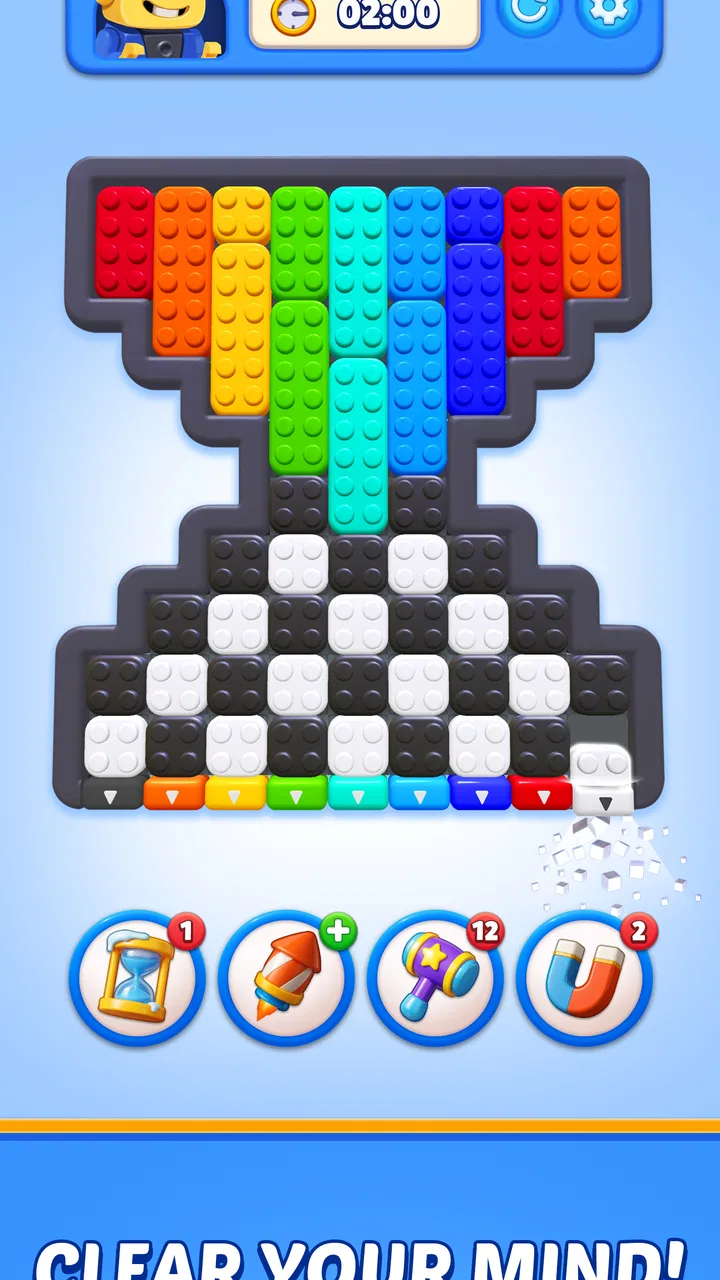
I installed Color Block: Jam Puzzle 3D expecting a quick color-sorting distraction, and that is exactly where it works best. It is a casual puzzle game from Flare Star LLC built around sliding colored blocks, arranging matching colors, and clearing the board. The central idea is easy to understand almost immediately, which matters when I only have a few spare minutes and do not want to learn a complicated rule set first.
What makes it worth discussing is not a huge story, a deep progression system, or a long list of modes. The appeal is the small burst of order that comes from turning a crowded arrangement into a clean result. I can open it while waiting for a coffee, play a short sequence, and put my phone away without feeling that I have abandoned a larger commitment. That short-session clarity is the strongest reason to try it.
The game is free to download and suitable for Everyone, while optional in-app purchases range from $1.99 to $99.99 per item. It requires Android 6.0 or later, and the current version is 1.35.0. Its release date was Mar 31, 2025, and it has already passed 500K installs with an average rating of 4.5 from around 17K ratings. Those figures suggest that the simple format has found a sizeable audience, though my opinion comes more from how the game feels in ordinary use than from its popularity.
You May Also Like

 Pandora - Music & Podcasts
Pandora’s Music Is Easy to Start, but Harder to Recover
Pandora’s strength is its low-effort path from a seed to a station. Its weak spot is how much confidence it asks you to place in connection, setup, and quiet recovery.

 AccuWeather: Weather Radar
AccuWeather Review: A Quick, Clear Forecast for Everyday Decisions
For everyday plans, the best forecast is the one you can understand quickly. AccuWeather makes rain timing, radar, and local conditions easy to act on, with a few trade-offs.

 Hill Climb Racing
Why Hill Climb Racing Still Turns Crashes Into One More Run
A tiny car, a bumpy hill and one more upgrade: Hill Climb Racing keeps resurfacing because its simple chaos makes every near-miss feel personal.

 AliExpress - Shopping App
AliExpress Makes Global Shopping Feel Personal, but Shoppers Bear the Risk
AliExpress turns a global marketplace into a pocket-sized discovery engine. Its reach is useful, its shopping loop compelling, and its trade-offs easy to miss.

 Lords Mobile: Kingdom Wars
Lords Mobile Is a Kingdom-Building Routine, Not a Quick Match
A case-by-case verdict on the building, battles, device demands, and social commitments that make Lords Mobile rewarding for some players and exhausting for others.

 PDF Scanner app - TapScanner
TapScanner Makes Paperwork Easier to Capture, Check, and Share
TapScanner makes scanning with a phone feel less like a rescue operation and more like a dependable step in getting work done. Its capture tools are useful, though not flawless.
More From Our News Desk
View All News


Why the first few rounds are so easy to enter
The opening experience is refreshingly direct. I do not need to decode a story, choose a character, or understand a complicated menu before playing. The visual objective is apparent: colored blocks are arranged in a way that creates congestion, and my job is to slide them into useful positions so matching colors can be sorted and cleared. That immediate readability gives the game a pleasant “one more try” quality from the first touch.
The best part of the hook is that the puzzle does not ask for a large investment before offering feedback. A successful move changes the board right away, and a sequence of good decisions creates a satisfying sense of momentum. Even when I make a less useful move, the mistake is usually understandable. I can see that I blocked a route, released the wrong piece, or failed to consider what another color needed next.
This is different from casual games that bury their main pleasure beneath rewards, menus, or lengthy tutorials. Here, the sorting problem is the attraction. The clean visual language also makes it approachable for players who are not regular puzzle fans. Someone who enjoys organizing objects, matching colors, or solving small spatial problems can understand the appeal without needing experience with a particular game series.
There is a trade-off, however. The same simplicity that makes the first session welcoming also limits the initial sense of discovery. Players looking for a dramatic opening, a rich narrative, or a highly unusual mechanic may find the presentation modest. I would not choose it for a long evening of immersive entertainment. I choose it when I want a compact mental task with a visible payoff.
A rhythm designed for spare minutes
In my experience, the natural rhythm is built around brief attempts rather than marathon play. I can start with the intention of solving one board and then decide whether I have enough attention for another. That makes it a useful companion for small gaps in the day: a queue, a short commute when I am not driving, or a pause between household tasks.
The important distinction is that the game provides a little concentration without demanding total concentration for a long period. I need to look at the arrangement and think ahead, but I am not required to remember a large cast of characters or follow a complicated chain of objectives. The mental load stays local to the board in front of me.
That makes the game especially suitable for players who like puzzles but dislike pressure. The pleasure comes from finding a workable order, not from racing a timer or competing against another player in the moments I played. If I want a calm activity that still gives my brain something to do, this is a better fit than a fast arcade title.
It is also a reasonable choice for a shared household device. The Everyone age rating keeps the concept broadly accessible, and the color-based rules are easier to explain than many strategy games. A parent could show the basic idea to a child, while an adult can still enjoy the more careful planning required when the arrangement becomes less obvious. I would still keep purchases in mind on a device used by children, since the game includes optional paid items.
How I approach a crowded board
My most useful habit was to stop treating every visible match as an immediate target. The obvious color is not always the correct first move. I began checking which block was preventing another route, then looked for a move that opened space rather than simply producing a quick match. This small change made the puzzles feel more deliberate and reduced the number of times I created a new blockage while trying to fix the old one.
A second useful approach is to scan the board in layers. I first look for pieces that appear to have the fewest movement options, then consider the colors that can be reached after those pieces move. This prevents me from spending all my attention on a large, easy-looking group while a less flexible block quietly controls the rest of the arrangement.
I also found it helpful to pause for a moment after a successful clearing sequence. The visual satisfaction can encourage automatic swiping, but the next position may require a different plan. Treating each change in the board as a new puzzle keeps the game from becoming a string of impulsive moves.
These are not complicated techniques, but they are the sort of small adjustments that give the game more value than the store summary suggests. The title looks simple, yet the order of operations matters. Players who enjoy spotting bottlenecks and planning one or two moves ahead will get more from it than players who only chase the most obvious color.
Returning after an interruption
The game’s strongest everyday quality is its tolerance for interruption. I can put it down when a message arrives, when someone needs my attention, or when my break ends. Because the action is organized around individual puzzle boards, I do not feel that I have ruined a long run by leaving suddenly. That is a major advantage over games that punish a short absence by wasting progress or dropping me into the middle of an ongoing event.
This makes it particularly comfortable for uneven schedules. I might play one board in the morning, return during lunch, and stop again before an appointment. The experience does not depend on having a perfectly protected block of time. For me, that flexibility is more valuable than a large amount of content that I would rarely have time to explore.
The pause-and-return strength also changes how I think about difficulty. A demanding puzzle is easier to accept when I know I can step away and revisit it later. If I reach a board that needs more thought, I can leave it rather than forcing a bad move because I am tired. When I come back, the arrangement often looks clearer, and I can inspect the available paths with less frustration.
That said, players who want a strong sense of long-term continuity may find the format light. The game is good at preserving the feeling of a small task, not at creating a grand journey. Its return value comes from solving another arrangement, not from following a substantial plot or building a complex personal profile.
Where the free model affects the experience
Since the game is free, it is reasonable to expect monetization to be part of the experience. Optional purchases are available, with individual items priced from $1.99 to $99.99. I would approach those options as conveniences rather than as a reason to begin playing. The core appeal should be whether the sliding and sorting feels satisfying without immediately reaching for extra help.
For a casual player, the safest mindset is to decide in advance whether purchases belong in the experience at all. If I am opening the game only for short breaks, I can treat each board as a self-contained challenge and avoid turning a small pastime into an unplanned expense. On a family device, I would also review purchase controls before handing the phone to a child.
The free entry point is still important. It lets me test the game’s particular kind of satisfaction without committing money first. That matters because color sorting is inherently appealing to some people and uninteresting to others. If the first boards feel more like routine tapping than problem solving, buying extras will not fix the underlying mismatch.
I would also avoid judging the game solely by how quickly it presents a reward. Its better moments come when I understand why a move worked, not merely when the screen reacts. Players who prefer a slower, more thoughtful approach may find the free version perfectly adequate as a pocket puzzle, while players seeking extensive depth should compare it with a fuller puzzle game before spending.
Replay value: pleasant routine or repetition?
Replay value is the area where my enthusiasm becomes more measured. The basic loop is clean and convenient, but it is also narrow: inspect colors, slide blocks, create useful matches, and clear the arrangement. That loop can remain enjoyable because each board asks for a different order of actions, yet the emotional range is smaller than in games that add exploration, story, construction, or competition.
I think of it as a game for repeatable moments rather than a game I need to finish. That distinction helps set the right expectation. I can return whenever I want a familiar kind of puzzle, much like picking up a magazine of small logic problems. I do not need the experience to reinvent itself every session for it to be useful.
Still, repetition becomes noticeable if I play for too long without a break. The same color-based interaction that feels soothing in a short session can feel mechanical during an extended one. My practical recommendation is to stop when the decisions begin to feel automatic. Returning later preserves the freshness better than pushing through several boards after the pleasure has faded.
Players comparing it with match-three games may notice an important difference. Traditional match-three alternatives often emphasize quick combinations, cascading effects, boosters, and a more visibly dramatic reward loop. Color Block: Jam Puzzle 3D is more about placement and access: which block should move first, what space will open, and how can the colors be cleared without creating a dead end? If you enjoy planning more than chasing combos, this game is the better match.
On the other hand, a dedicated logic-puzzle app may offer more variety in rules, larger problem sets, or a more demanding sense of progression. I would choose that alternative when I want a serious brain-training session or a puzzle that remains challenging for a longer period. This title wins when convenience and immediate understanding matter more than breadth.
Who should make room for it
I recommend it to people who want a low-friction game for short pauses, especially those who like visual organization and small spatial decisions. It is also a good fit for players who are easily interrupted, because the board-by-board structure supports stopping without much ceremony. The Everyone rating makes the concept broadly approachable, although adults should still pay attention to the purchase options on shared devices.
I would skip it if my priority were competitive play, a strong narrative, character development, or a constantly changing set of mechanics. I would also look elsewhere if I need a game that rewards long sessions with a deep strategic arc. Its strength is not ambition; it is the ability to offer a clear, contained puzzle whenever I have a few minutes available.
One less obvious use is as a transition activity. I found that a short board can help mark the end of one task and the beginning of another without pulling me into an endless feed. The game gives me a defined objective, and completing it creates a natural stopping point. That works better for me than opening a social app where there is no clear moment to leave.
Another practical use is playing with sound turned down in places where I need to remain aware of my surroundings. The core information is visual, so the game’s appeal does not depend on following dialogue or audio cues. I would still avoid playing in situations that require full attention, but it fits quiet waiting spaces more naturally than an audio-heavy or action-focused title.
My casual verdict after settling into the loop
Color Block: Jam Puzzle 3D succeeds because it understands the value of a small, readable challenge. I can open it, recognize the objective, make a few thoughtful moves, and leave without feeling that I have missed a major event. The sliding and matching structure offers immediate pleasure, while the need to plan around blocked paths gives the simple idea enough substance for repeat visits.
Its limitations are equally clear. The format can become repetitive during long sessions, and it is not designed to replace a deep puzzle collection or a story-driven game. The optional purchases also mean I would use sensible spending controls, particularly on a shared phone or tablet. Those points do not ruin the experience, but they define who will appreciate it most.
For my own use, the deciding factor is interruption tolerance. I can play it during an ordinary day without rearranging my schedule around it. When I have more time, I may choose a richer puzzle game; when I have only a small gap, this one is easier to start and easier to stop. That makes it a practical recommendation rather than an all-purpose one.
My final recommendation is simple: choose it for short, calm bursts of color-based problem solving, not for deep progression or endless novelty. If that sounds like the kind of game you want beside you during spare minutes, Flare Star LLC has delivered a focused casual experience that is easy to understand and satisfying in the right dose.
FAQs for Color Block: Jam Puzzle 3D
01What is Color Block: Jam Puzzle 3D, and how is it played?
Color Block: Jam Puzzle 3D is a casual puzzle game built around matching colors and clearing groups of blocks in a three-dimensional board. You typically tap or move blocks to create valid combinations, remove obstacles, and complete each level within the available moves or conditions. The early stages are easy to understand, while later puzzles require more planning and attention.
02Is Color Block: Jam Puzzle 3D free to download and play?
The game can generally be downloaded for free on supported Android and iOS devices, allowing players to access the main puzzle experience without an upfront purchase. However, free games may include optional in-app purchases for coins, boosters, extra moves, or other conveniences. Check the store listing before downloading for current pricing, advertisements, and purchase details.
03Does the game require an internet connection?
Many levels in Color Block: Jam Puzzle 3D may be playable offline once the game has been installed, which makes it suitable for short sessions while traveling or when mobile data is unavailable. Nevertheless, an internet connection can be required for advertisements, rewards, updates, cloud features, or certain events. Offline availability may also vary between versions and devices.
04Are there advertisements or in-app purchases in Color Block: Jam Puzzle 3D?
Players should expect the possibility of advertisements and optional in-app purchases, as is common with free-to-play puzzle games. Ads may appear between levels or after requesting bonus rewards, while purchases can provide currency, boosters, or additional attempts. You can usually play without spending money, but progress may feel slower if you decline optional bonuses.
05Is Color Block: Jam Puzzle 3D suitable for children and casual players?
The simple controls, colorful presentation, and short levels make Color Block: Jam Puzzle 3D approachable for casual players and older children. Still, parents should review the game’s age rating, advertising practices, and purchase settings before allowing unsupervised play. Difficulty can increase over time, so younger players may occasionally need help with more complex boards or timed challenges.
Pros
- Simple drag-and-match controls are easy for all ages.
- 3D visuals make the colorful block layouts enjoyable to follow.
- Short levels suit quick play sessions during breaks.
- Progressive challenges help introduce new puzzle mechanics gradually.
- Offline play is convenient when no internet connection is available.
Cons
- Some puzzles may feel repetitive after extended play sessions.
- Difficulty can vary noticeably between consecutive levels.
- Ads may interrupt gameplay
- especially between completed stages.
- Limited hints can make certain crowded layouts frustrating.
- The 3D perspective may occasionally make block positions unclear.

Color Block: Jam Puzzle 3D
Gallery